
For CFA candidates with one goal: Pass Level 1…FAST.
93 Secret Playbooks Top Scorers Use to Pass CFA Level I Without the 300+ Hour Grind
CFA Level 1 has 10 volumes, 93 modules, 3400+ pages of noise. All to solve 180 questions.
Our CFA Exam experts stripped it down to the exact formulas, logic, and decisions you need to solve the 180 exam questions in 90 seconds flat.
DOWNLOAD ALL PLAYBOOKS FOR JUST $15 👇🏻
Price increases after next 200 sales.
↓ Play To See What EACH Playbook Contains ↓
↓ Or Scroll Right To See What EACH Playbook Contains ↓
Top 3 Question HOTSPOTS
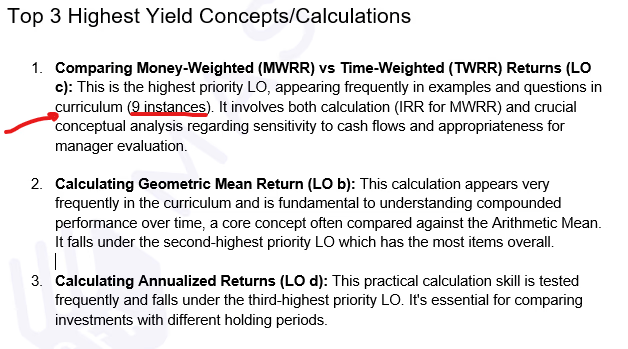
What To Study & Why
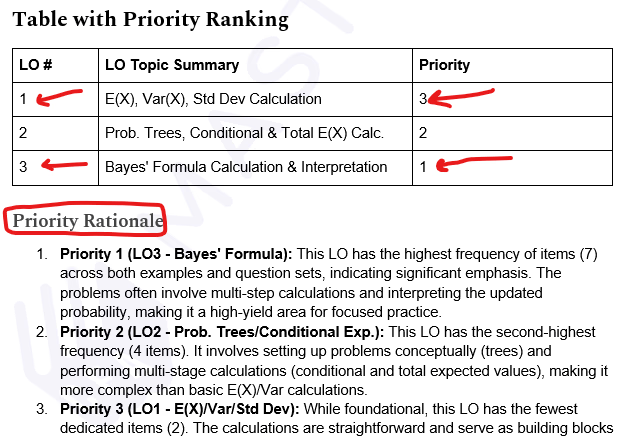
Quick IF-THEN-DO Shortcuts
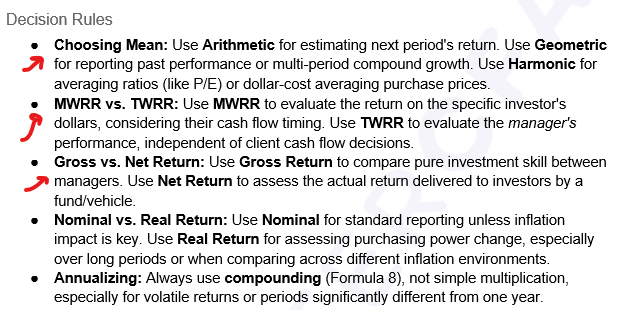
Silly Mistakes To Avoid
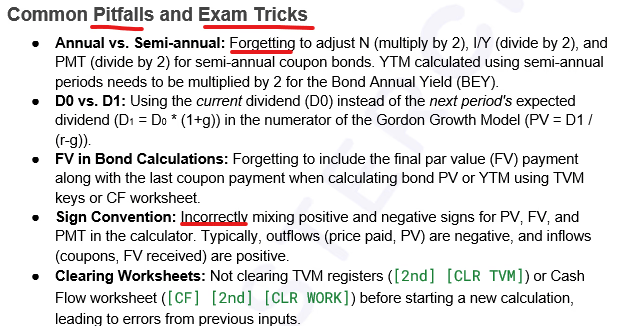
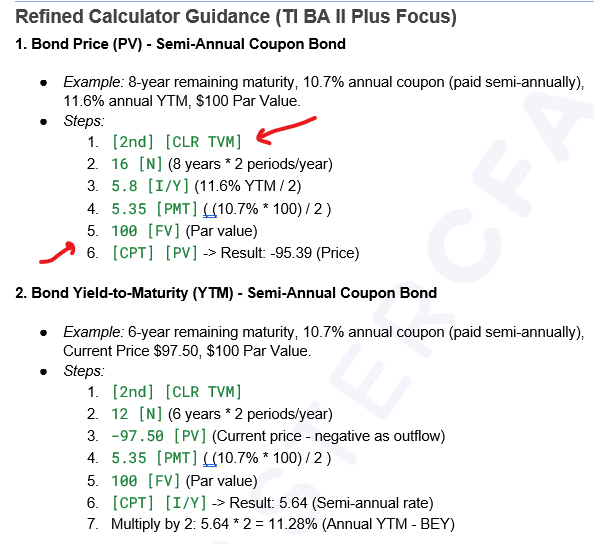
Guided Calculator Solutions
Here's What CFA Candidates Say:
These Playbooks will help you...
Save hundreds of hours of study time
Stop wasting time on low-yield material
Remember formulas & key terms under pressure
Avoid silly mistakes that kill your score
Execute calculator keystrokes flawlessly
Pass CFA Level 1 on your first attempt
... and so much more!!
Price increases after next 200 sales.
Who Is This For?
These playbooks will help you in three main study situations. If you're in one of these situations, this will be a perfect fit!👇🏻

First-Time Candidates
Busy & Overwhelmed by curriculum

Working Professionals
Time constrained & Less than 5 months to prepare

Exam Retakers Who Need The Edge
Need to get over 70%+ to feel confident
👇🏻HOW THESE PLAYBOOKS WILL HELP YOU👇🏻
Confused About Where To Start?
Prioritized Study Order
Not everything is EXAM important - our LOs priority shows you what you should focus to maximise your score.
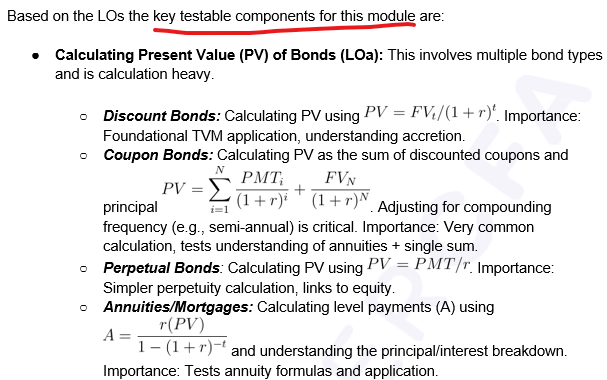
Quick Review
Find out what you already know & what you don't know. Instead of sitting through hours of videos and pdfs get the big picture in 1 page.
Price increases after next 200 sales.
👇🏻HOW THESE PLAYBOOKS HELP YOU👇🏻
Making Mistakes & Scoring Low?
Shortcut To High Score
Simple IF-THEN decision rules for crushing the exam questions faster under pressure.
Silly Mistakes To Avoid
A list of all the silly mistakes and examiner tricks to score higher.
Price increases after next 200 sales.
👇🏻HOW THESE PLAYBOOKS HELP YOU👇🏻
Forgetting Formulae & Application?
Calculator Mastery
Step-by-step keystrokes for high-probability question patterns. Stop fumbling, start executing.
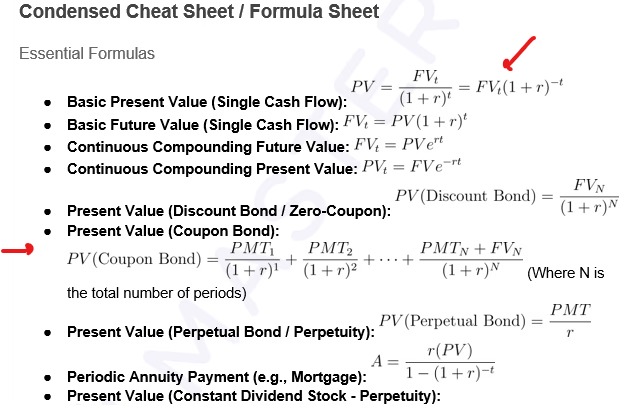
Formula Application Drills
When and how to use each formula correctly under exam pressure.
Price increases after next 200 sales.
👇🏻HOW THESE PLAYBOOKS HELP YOU👇🏻
Looking To Quickly Revise Daily?
High-Yield Question Patterns
No fluff. Guaranteed-to-be-tested question types per module. CFA Institute NEEDS to test these to test your knowledge.
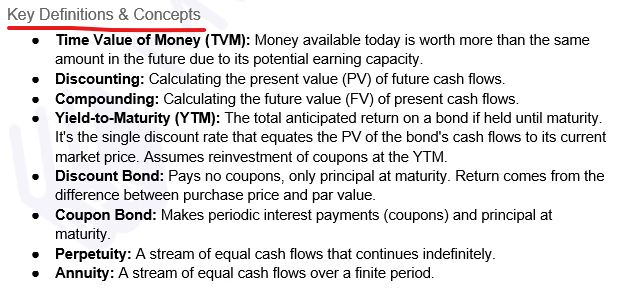
Quick Exam Essential Concepts
List of all the testable concepts that you need to understand a questions and solve it confidently.
Price increases after next 200 sales.
What's Included?
CFA Level 1 Complete Topic Coverage
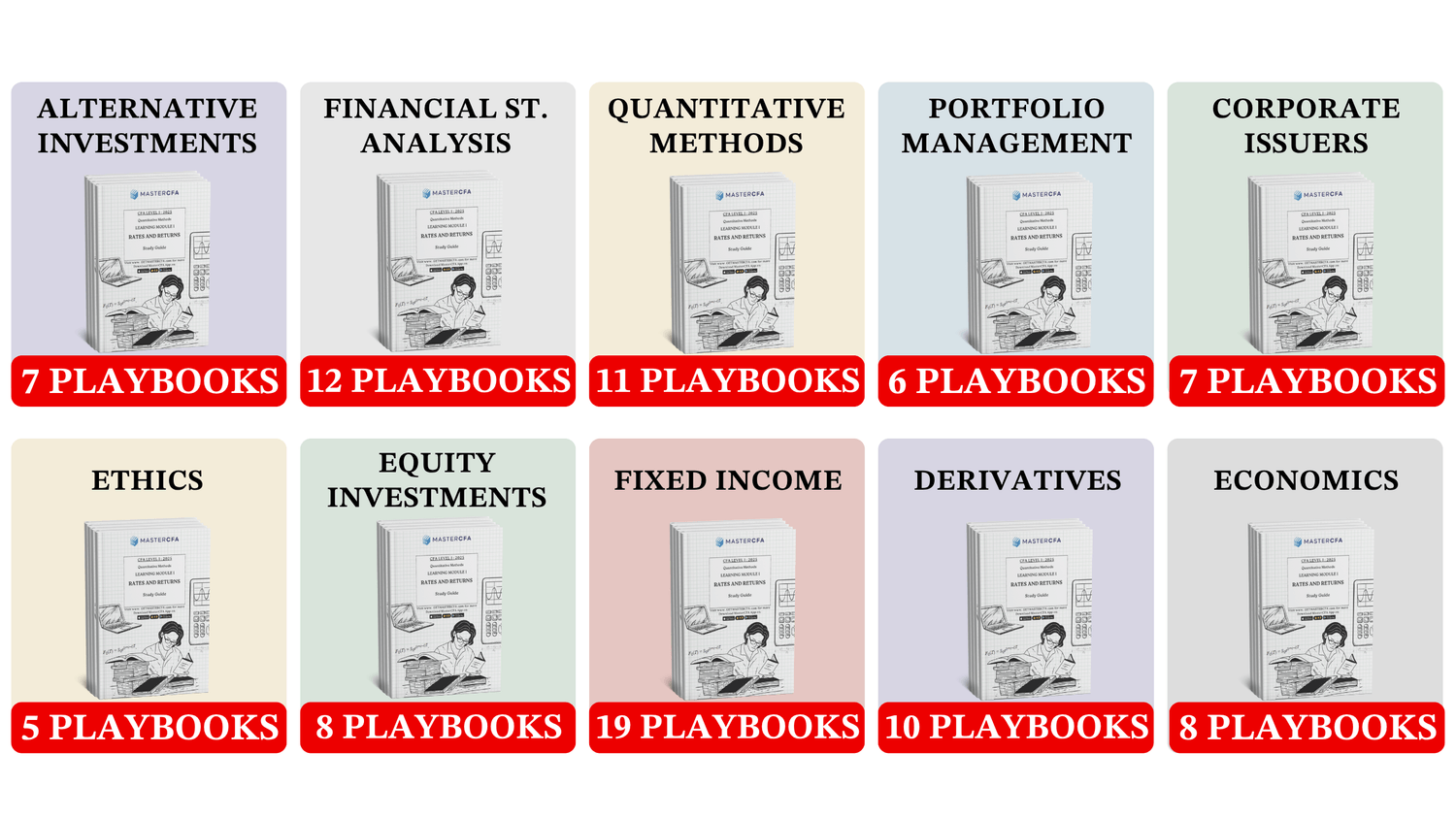
👇🏻93 Playbooks Total👇🏻
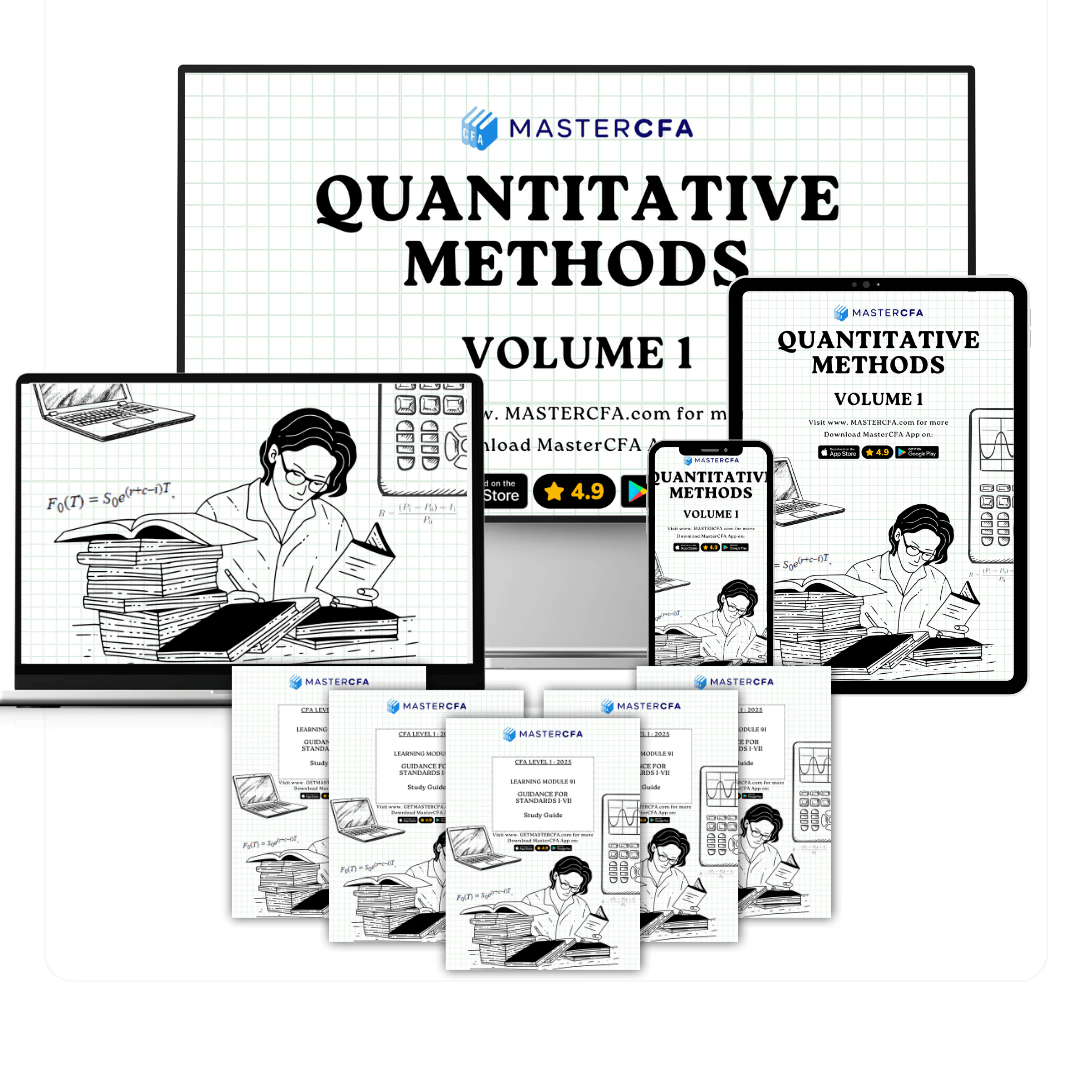
Quantitative Methods - 11 Playbooks
1. Rates and Returns
2. The Time Value of Money in Finance
3. Statistical Measures of Asset Returns
4. Probability Trees and Conditional Expectations
5. Portfolio Mathematics
6. Simulation Methods
7. Estimation and Inference
8. Hypothesis Testing
9. Parametric and Non-Parametric Tests of Independence
10. Simple Linear Regression
11. Introduction to Big Data Techniques
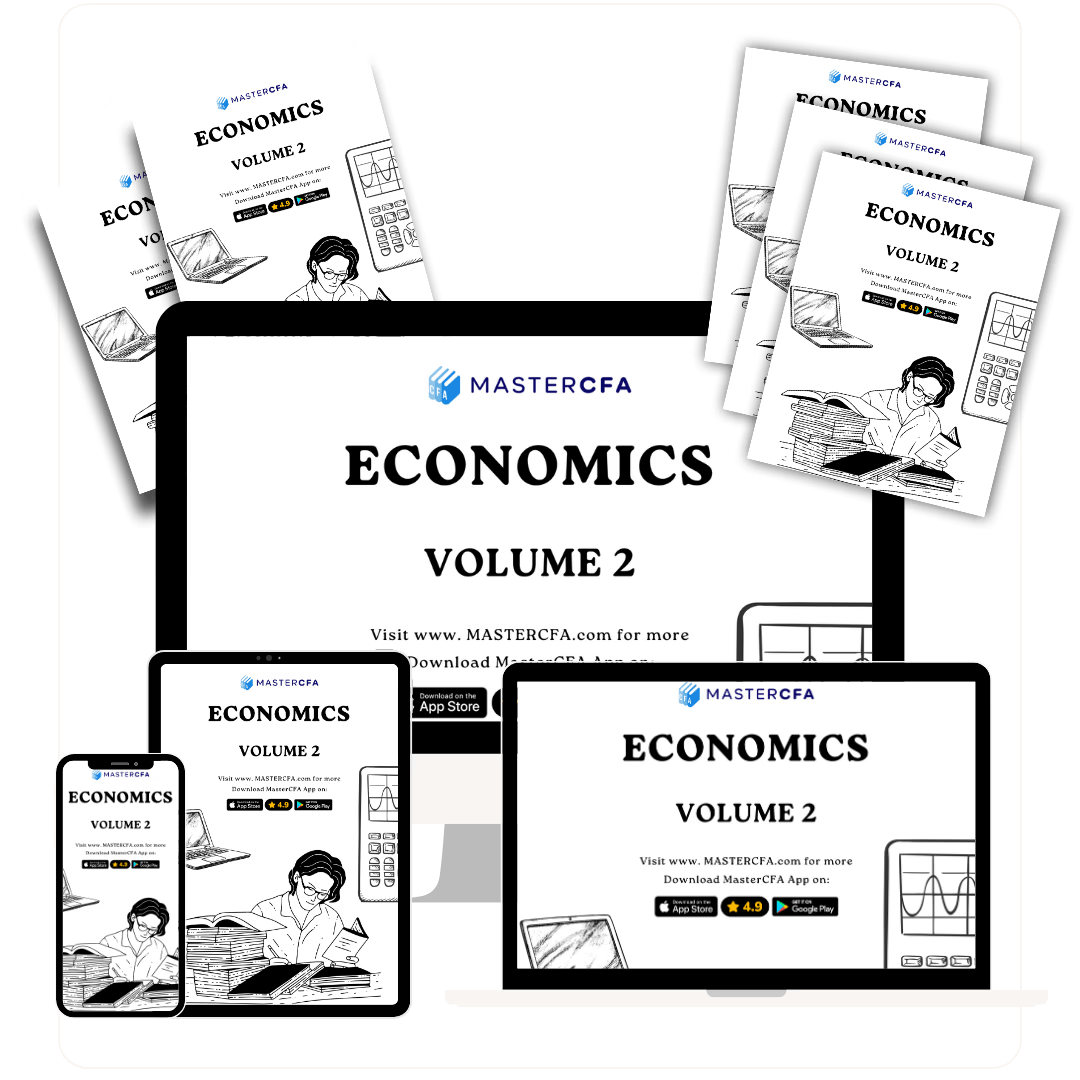
Economics - 8 Playbooks
1. Firms and Market Structures
2. Understanding Business Cycles
3. Fiscal Policy
4. Monetary Policy
5. Introduction to Geopolitics
6. International Trade
7. Capital Flows and the FX Market
8. Exchange Rate Calculations
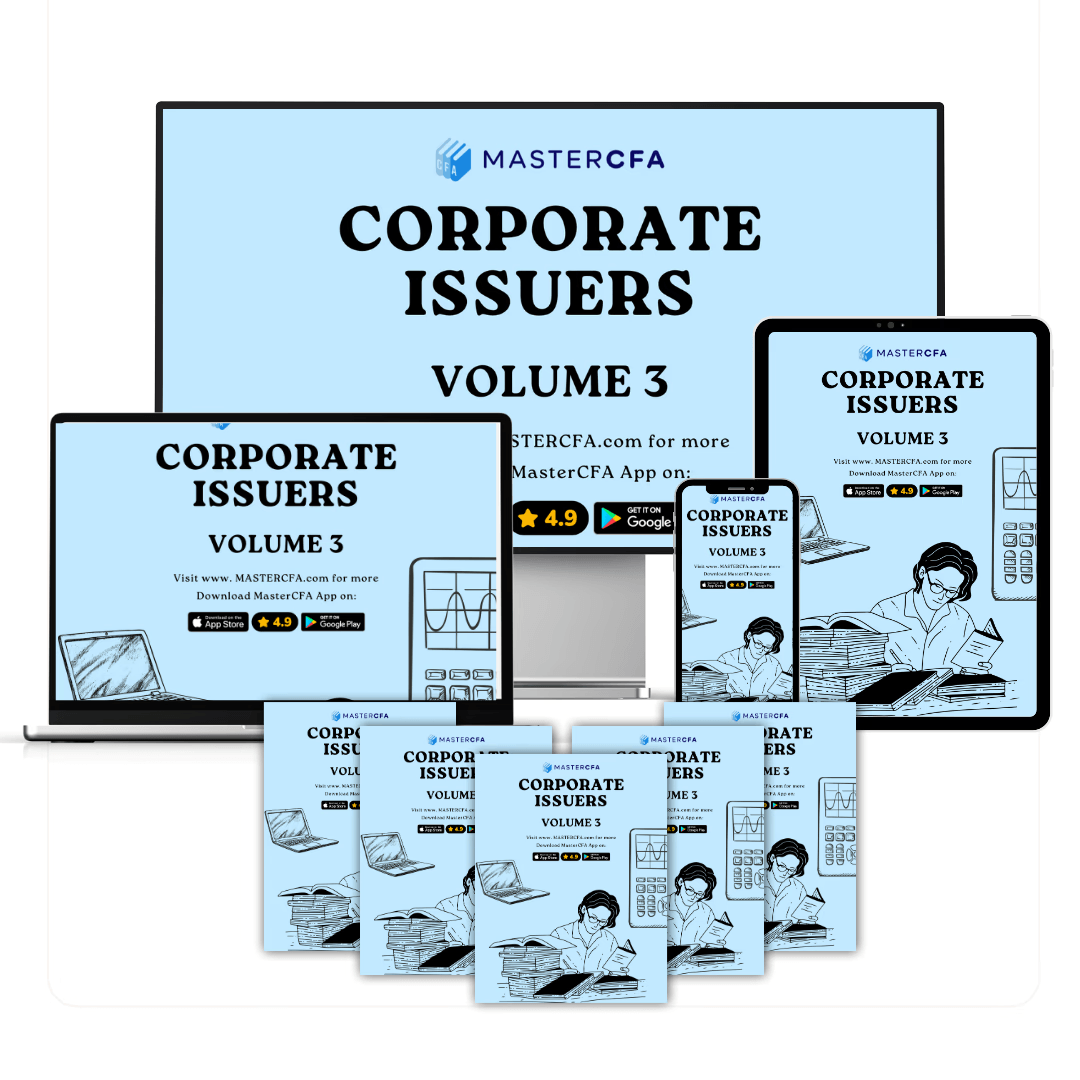
Corporate Issuers - 7 Playbooks
1. Organizational Forms, Corporate Issuer Features, and Ownership
2. Investors and Other Stakeholders
3. Corporate Governance: Conflicts, Mechanisms, Risks, and Benefits
4. Working Capital and Liquidity
5. Capital Investments and Capital Allocation
6. Capital Structure
7. Business Models
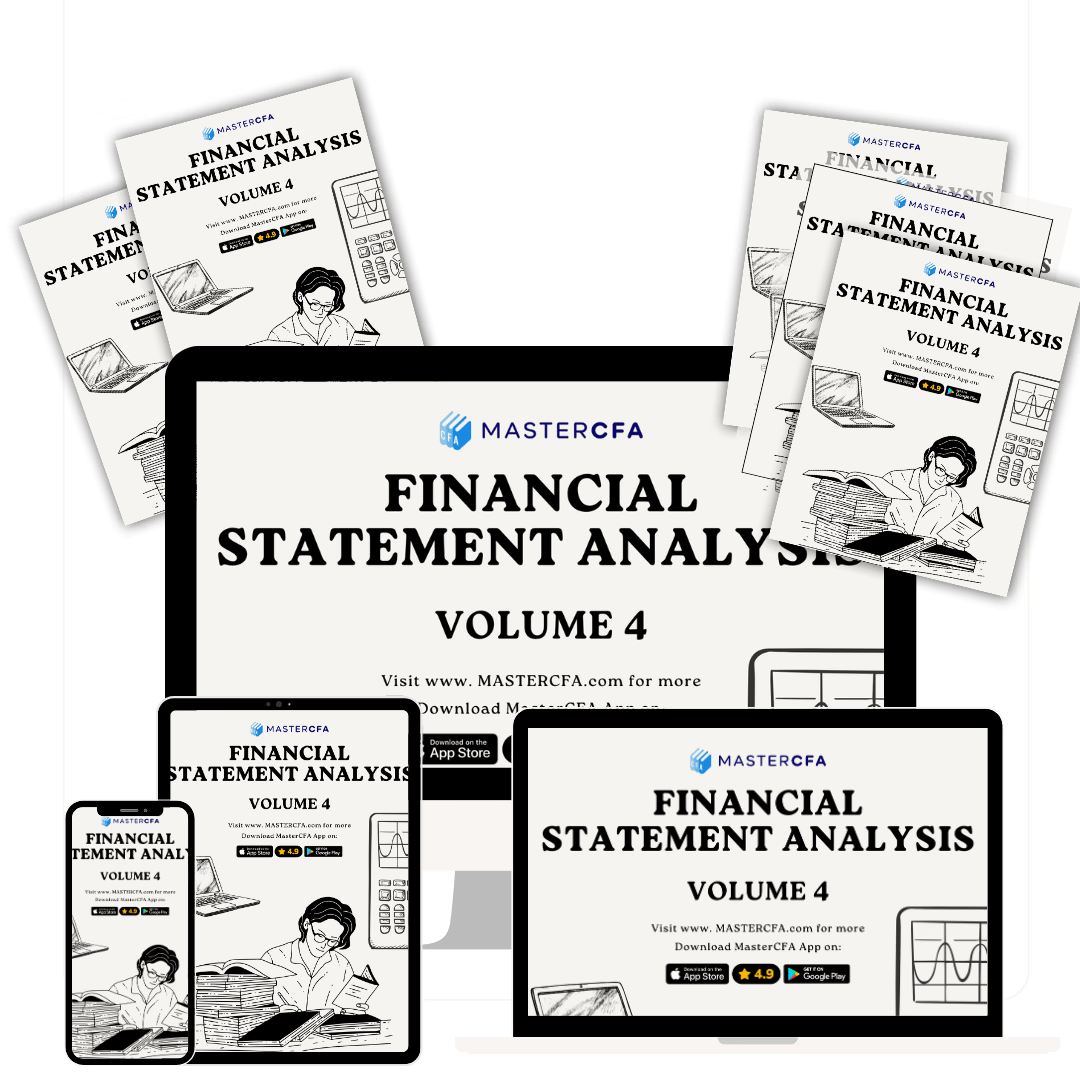
Financial Statement Analysis - 12 Playbooks
1. Introduction to Financial Statement Analysis
2. Analyzing Income Statements
3. Analyzing Balance Sheets
4. Analyzing Statements of Cash Flows I
5. Analyzing Statements of Cash Flows II
6. Analysis of Inventories
7. Analysis of Long-Term Assets
8. Topics in Long-Term Liabilities and Equity
9. Analysis of Income Taxes
10. Financial Reporting Quality
11. Financial Analysis Techniques
12. Introduction to Financial Statement Modeling
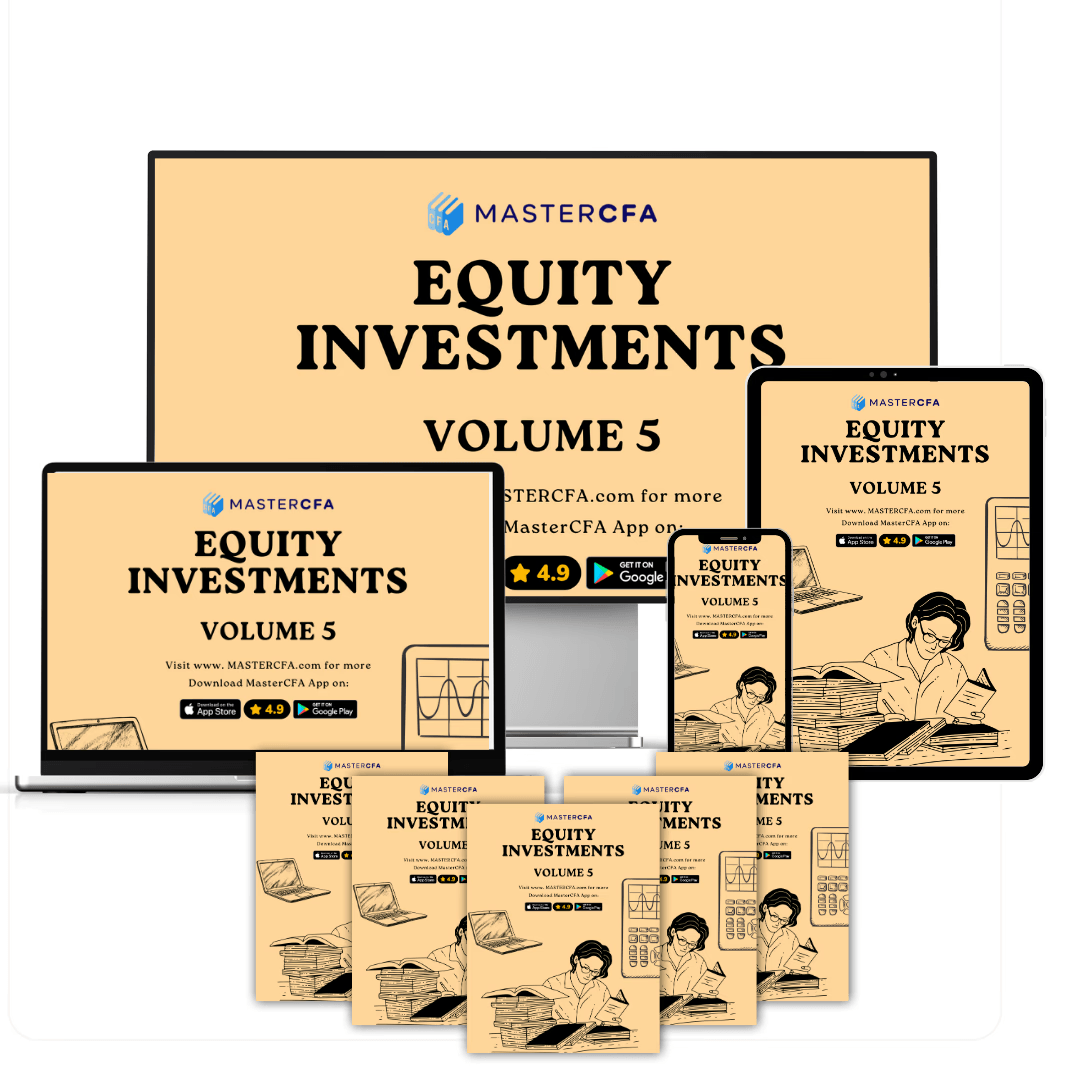
Equity Investments - 8 Playbooks
1. Market Organization and Structure
2. Security Market Indexes
3. Market Efficiency
4. Overview of Equity Securities
5. Company Analysis: Past and Present
6. Industry and Competitive Analysis
7. Company Analysis: Forecasting
8. Equity Valuation: Concepts and Basic Tools
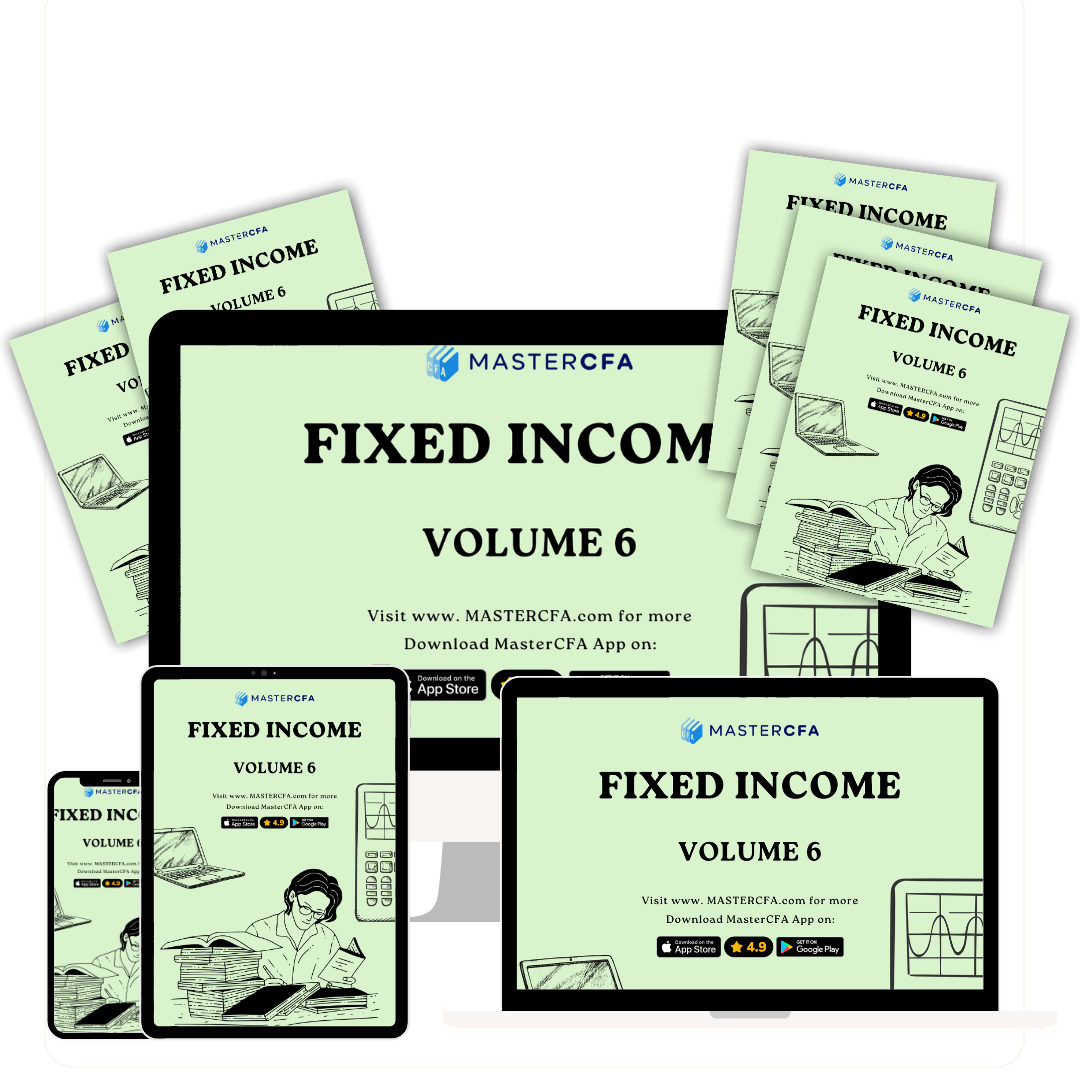
Fixed Income - 19 Playbooks
1. Fixed-Income Instrument Features
2. Fixed-Income Cash Flows and Types
3. Fixed-Income Issuance and Trading
4. Fixed-Income Markets for Corporate Issuers
5. Fixed-Income Markets for Government Issuers
6. Fixed-Income Bond Valuation: Prices and Yields
7. Yield and Yield Spread Measures for Fixed-Rate Bonds
8. Yield and Yield Spread Measures for Floating-Rate Instruments
9. The Term Structure of Interest Rates: Spot, Par, and Forward Curves
10. Interest Rate Risk and Return
11. Yield-Based Bond Duration Measures and Properties
12. Yield-Based Bond Convexity and Portfolio Properties
13. Curve-Based and Empirical Fixed-Income Risk Measures
14. Credit Risk
15. Credit Analysis for Government Issuers
16. Credit Analysis for Corporate Issuers
17. Fixed-Income Securitization
18. Asset-Backed Security (ABS) Instrument and Market Features
19. Mortgage-Backed Security (MBS) Instrument and Market Features
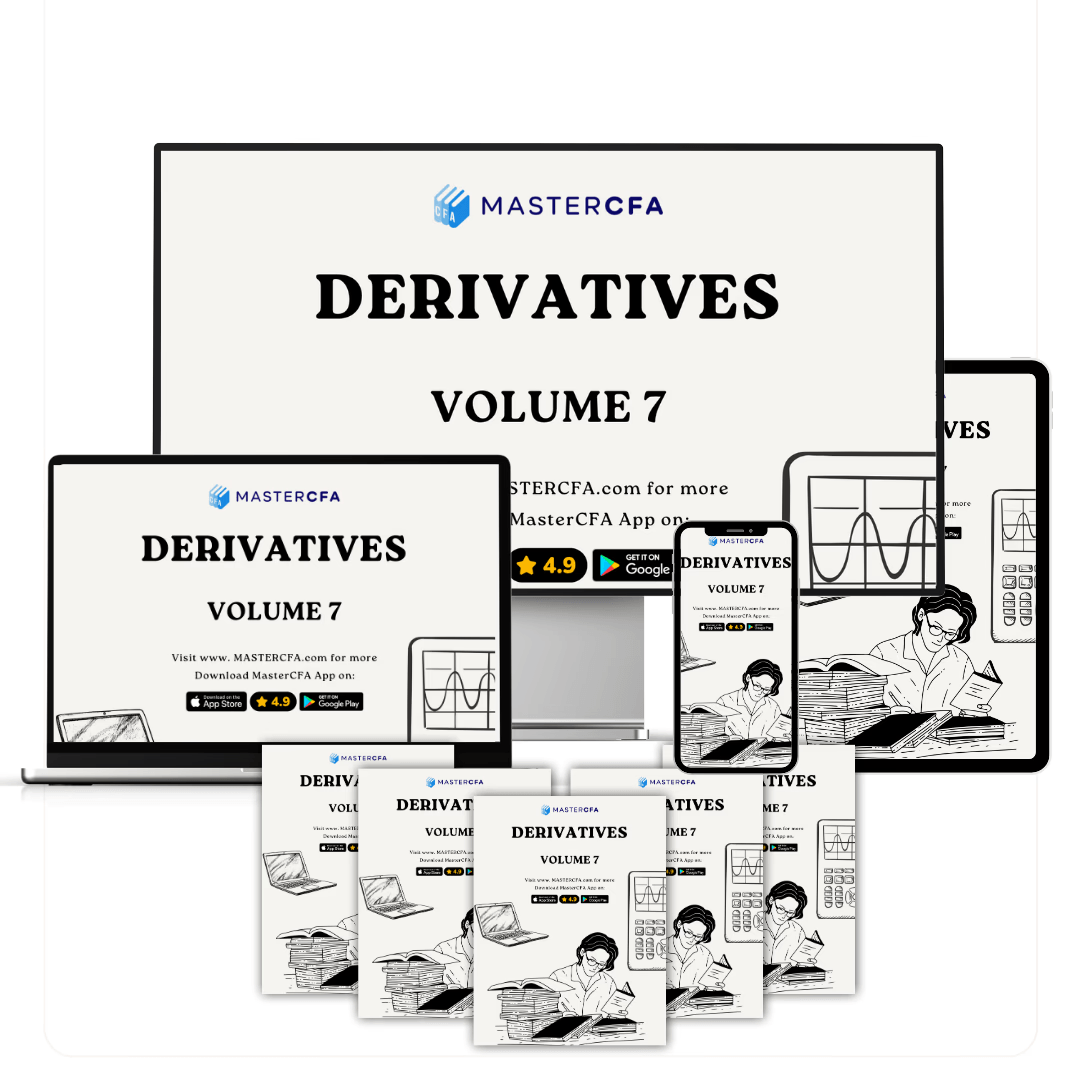
Derivatives - 10 Playbooks
1. Derivative Instrument and Derivative Market Features
2. Forward Commitment and Contingent Claim Features and Instruments
3. Derivative Benefits, Risks, and Issuer and Investor Uses
4. Arbitrage, Replication, and the Cost of Carry in Pricing Derivatives
5. Pricing and Valuation of Forward Contracts & for an Underlying with Varying Maturities
6. Pricing and Valuation of Futures Contracts
7. Pricing and Valuation of Interest Rates and Other Swaps
8. Pricing and Valuation of Options
9. Option Replication Using Put–Call Parity
10. Valuing a Derivative Using a One-Period Binomial Model
Alternative Investments - 7 Playbooks
1. Alternative Investment Features, Methods, and Structures
2. Alternative Investment Performance and Returns
3. Investments in Private Capital: Equity and Debt
4. Real Estate and Infrastructure
5. Natural Resources
6. Hedge Funds
7. Introduction to Digital Assets
Portfolio Management - 6 Playbooks
1. Portfolio Risk and Return: Part I
2. Portfolio Risk and Return: Part II
3. Portfolio Management: An Overview
4. Basics of Portfolio Planning and Construction
5. The Behavioral Biases of Individuals
6. Introduction to Risk Management

Ethics - 5 Playbooks
1. Ethics and Trust in the Investment Profession
2. Code of Ethics and Standards of Professional Conduct
3. Guidance for Standards I–VII
4. Introduction to the Global Investment Performance Standards (GIPS)
5. Ethics Application
Price increases after next 200 sales.

In case we haven't met yet...
Hey, I'm Devesh! 👋
I passed CFA Level 1 while studying for 3 other exams (CAT, FRM, GMAT) in less than 60 days.
How? I had no other option.
So I focused on one thing: solving problems under time pressure.
Result: Passed CFA L1, FRM, CAT (99th percentile), GMAT 720
What I learned: Most people fail because they watch videos instead of practicing problems.
That's why MasterCFA exists.
Analytics and content that matters.
And it starts with these playbooks.
93 razor sharp playbooks.
One for each module of the curriculum.
Ten pages. Maximum signal. Minimum noise.
Students who use this approach can cut study time by 40% and actually improve scores.
Best of Luck,
Devesh.
Price increases after next 200 sales.
Frequently Asked Questions
Write to us at support@mastercfa.com if you don't find your answers here.
A: Think of MasterCFA as your AI drill sergeant for CFA Level 1. Not another dusty PDF. Not another 60-hour lecture you’ll never finish. We give you: 8,000+ adaptive practice questions Animated case studies (you’ll actually stay awake for) AI analytics that slap you with your weak spots Mobile flashcards that stalk you everywhere 30–60 minutes a day. That’s it. It’s the system that drags you into the 40% who pass.
A: Sure. If your plan is to be the 60% who fail. Notes ≠ skills. Here’s the truth: Hoarding PDFs, pirated videos, and “friend’s notes” feels like progress… but unless you can crush a CFA question in 90 seconds with 70% accuracy, you’re just LARPing as a candidate. MasterCFA builds that muscle. Notes don’t.
A: Yeah, and you can use Google too. Or ChatGPT. Or a Magic 8 Ball. But here’s the problem: Option 1: Binge free videos at 1.5x and hope “familiarity” saves you. (Spoiler: it doesn’t. That’s why 3/5 fail.) Option 2: Learn with short case-based videos, test yourself instantly, get AI feedback, and actually retain stuff. You don’t need more videos. You need a system that turns knowledge into recall.
A: No. Only you can. But we’ll do everything short of sitting the exam for you. Our job is to provide a system: AI-powered, daily drills, brutal feedback. Your job: Show up daily. Swing the sword. If you are failing you will know from our weekly reports anyway :)
A: OMG - You opened the last FAQ...GUYS.. it happened... we found a crazy one. BRO. You already dropped $1,400+ on the CFA exam fee. You could have completed ten questions by now!
This site is not a part of the Facebook website or Facebook Inc. Additionally, This site is NOT endorsed by Facebook in any way. FACEBOOK is a trademark of META, Inc
CFA Institute does not endorse, promote, or warrant the accuracy or quality of the products or services offered by MasterCFA. CFA® and Chartered Financial Analyst® are registered trademarks owned by CFA Institute.
Write to support@mastercfa.com in case of issues.
Grab Your FREE Mini-Course!
CONTAINS:
Study Plan for CFA Level 1: 28 minutes
Solve CFA Q.s in 90secs : 31 minutes
You will receive an email for confirmation please click on it to access your course.
We HATE spam. Your email address is 100% secure